DEMENTIA AND THE BRAIN
WHAT IS DEMENTIA?
Dementia is a degenerative disorder characterized by memory loss and forgetfulness. It’s most common in the elderly, but in some instances younger people can develop it too. Overtime, the symptoms of Dementia can make it impossible for one to live on their own, so they may need assistance. Eventually, Dementia affects the ability to swallow, cough, and even breathe.
Worldwide, around 50 million people have Dementia. Every year, there are approximately 10 million new cases. Most of these cases are Alzheimer’s, which is the most common form of Dementia and affects about 11% of people.
The exact cause of Dementia isn’t known, but there are many factors that can increase the risk for dementia later on in life, such as drugs, alcohol, genetics, infections, and concussions or other head injuries.
Dementia may be hard to diagnose at first, as there are not many tests that aid in diagnosing it. Some of the time, Dementia can only be confirmed after the sufferer dies by doing an autopsy.
Unfortunately, there is no cure for Dementia, so many people who have it have to die a slow death.
SYMPTOMS
The symptoms of Dementia vary greatly depending on the person and stage of Dementia, but early symptoms include:
Forgetfulness and memory loss
Depression
Mood changes
Confusion
Difficulty completing familiar tasks
Problems with speaking or writing
As the disease progresses, it can lead to more serious symptoms, such as:
Inability to move on one’s own
Inability to speak or write
Inability to remember close friends or family members
Breathing difficulty
Eating difficulty
Bladder and bowel incontinence
The stages of dementia
STAGE 1
Stage 1 dementia is normal cognitive ability. At this stage there are no symptoms of Dementia. People with no Dementia would be considered stage 1.
STAGE 2
This stage deals with normal cognitive impairment associated with aging. Symptoms are not evident to other people, but may be evident to the sufferer.
STAGE 3
Cognitive impairment continues to decrease. Some concentration problems may become apparent as well. Sufferers may get lost or have trouble finding correct words.
STAGE 4
People in stage 4 continue to have worsening memory problems. Sufferers will have trouble completing complex tasks and may get lost when travelling alone to new locations.
STAGE 5
People in this stage have major cognitive decline and need assistance completing everyday tasks. Memory loss is more prominent and may include the loss of important memories.
STAGE 6
People in stage 6 require extensive assistance to carry out daily activities. They may begin to forget the names of close family members and friends. Decreased ability to speak and decreased cognitive ability become more apparent, as well as incontinence.
STAGE 7
Sufferers in this stage of Dementia have lost the ability to speak or communicate effectively. Incontinence and loss of the ability to walk is also possible.
Dementia changes the physical structure of the brain in many ways. The disease causes the loss of brain cells, which is the cause of the loss of memory. As the brain cells continue to die, cognitive ability becomes worse and worse until death.
During an autopsy, it becomes easier to confirm a Dementia diagnosis. Many times the brain will have shrank considerably in comparison to a healthy human brain (see images below).
It isn’t exactly known what causes the progression of the disease, but one theory suggest that small strokes may speed up the process. Brain injury may cause some forms of Dementia as well.
Effect on the brain
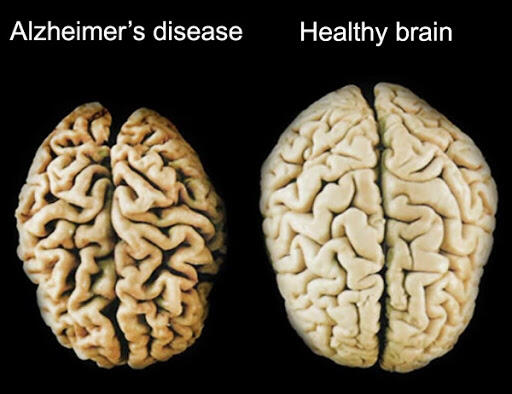
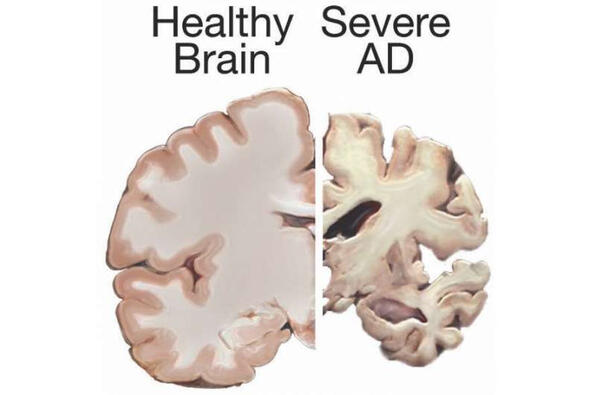
Photos comparing a healthy brain to a brain
with Alzheimer’s, the most common form of Dementia.
Everywhere at the end of time
Everywhere at the End Of Time (EATEOT) was a project by Leyland Kirby, who at the time of making the project went by the alias of The Caretaker. EATEOT is a representation of Dementia in the form of music. As the album progresses, the music becomes more and more distorted and confusing, similar to the stages of Dementia.
The album samples parts of old ballroom music from the 20s and 30s, often with static or distortion to represent the loss of memories. At the end of the 6th part, a choir can be heard, which is the only time in the entire album in which there are human voices. These likely represent terminal lucidity, the unexpected return of mental clarity and memory right before death.
In total, there are 6 parts, despite there being 7 stages of Dementia. All of the parts together total about 6 hours. Each part represents a different stage of Dementia. The parts all have individual descriptions:
PART 1
Here we experience the first signs of memory loss. This stage is most like a beautiful daydream.
The glory of old age and recollection. The last of the great days.
PART 2
The second stage is the self realisation and awareness that something is wrong with a refusal to accept that. More effort is made to remember so memories can be more long form with a little more deterioration in quality. The overall personal mood is generally lower than the first stage and at a point before confusion starts setting in.
PART 3
Here we are presented with some of the last coherent memories before confusion fully rolls in and the grey mists form and fade away. Finest moments have been remembered, the musical flow in places is more confused and tangled. As we progress some singular memories become more disturbed, isolated, broken and distant. These are the last embers of awareness before we enter the post awareness stages.
PART 4
Post-Awareness Stage 4 is where serenity and the ability to recall singular memories gives way to confusions and horror. It's the beginning of an eventual process where all memories begin to become more fluid through entanglements, repetition and rupture.
PART 5
Post-Awareness Stage 5 confusions and horror. More extreme entanglements, repetition and rupture can give way to calmer moments. The unfamiliar may sound and feel familiar.
Time is often spent only in the moment leading to isolation.
PART 6
Post-Awareness Stage 6 is without description.
All 6 stages of EATEOT
IMAGES
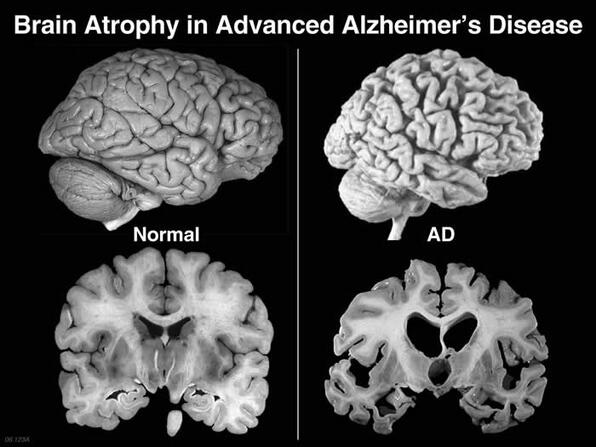
The brain atrophy in Alzheimer’s compared to a healthy
brain. Notice the size difference.
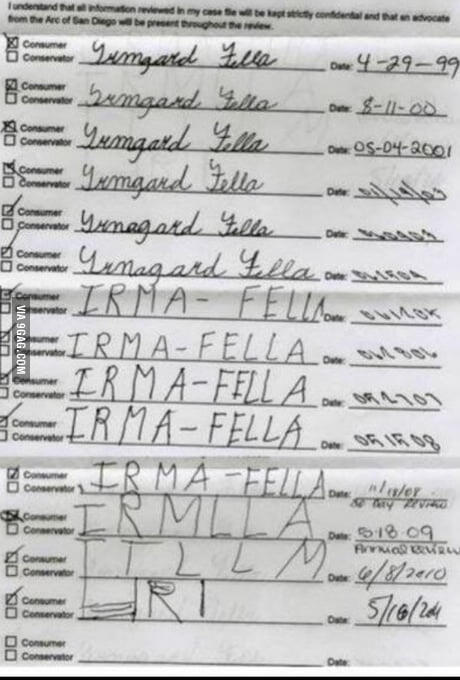
As Dementia progresses, it becomes harder and harder
to do everyday things, such as write your own name.
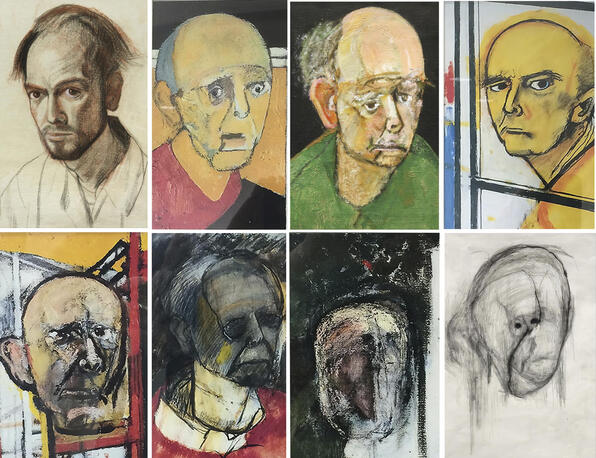
The self-portraits of William Utermohlen as he
descended into Dementia. He eventually forgets his own face.
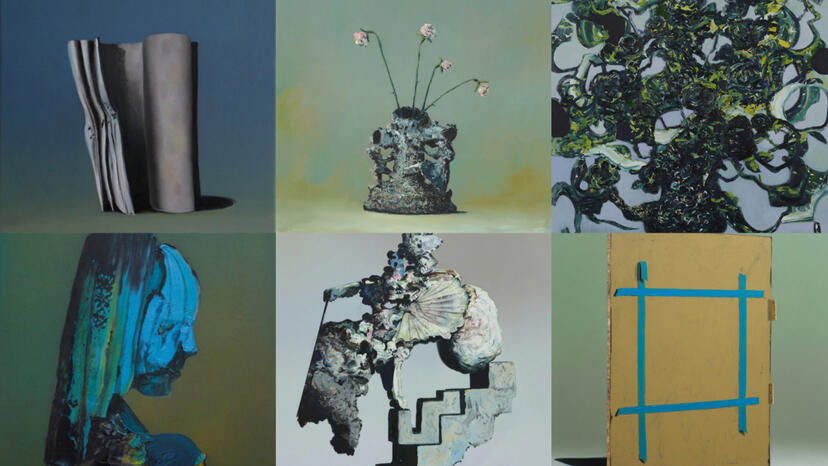
All of the paintings in EATEOT (painted by Ivan Seal).
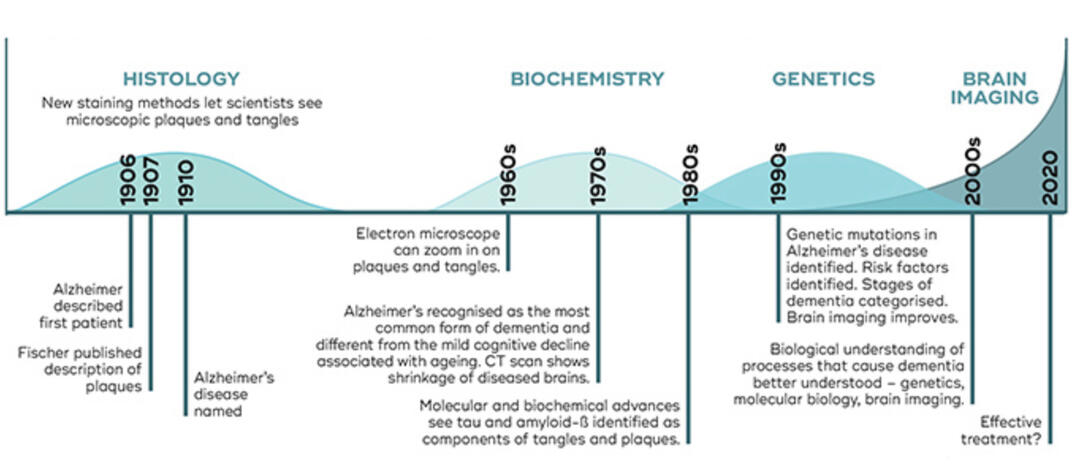
A basic timeline of Dementia Research.
LEARN MORE
Alzheimer’s Association information on Dementia
CDC: What is Dementia?
WHO information on Dementia
MedlinePlus information on Dementia
WebMD: Types of Dementia Explained
Leisure Care: 7 stages of Dementia
One Last Godbye: The Strange Case of Terminal Lucidity